
Process
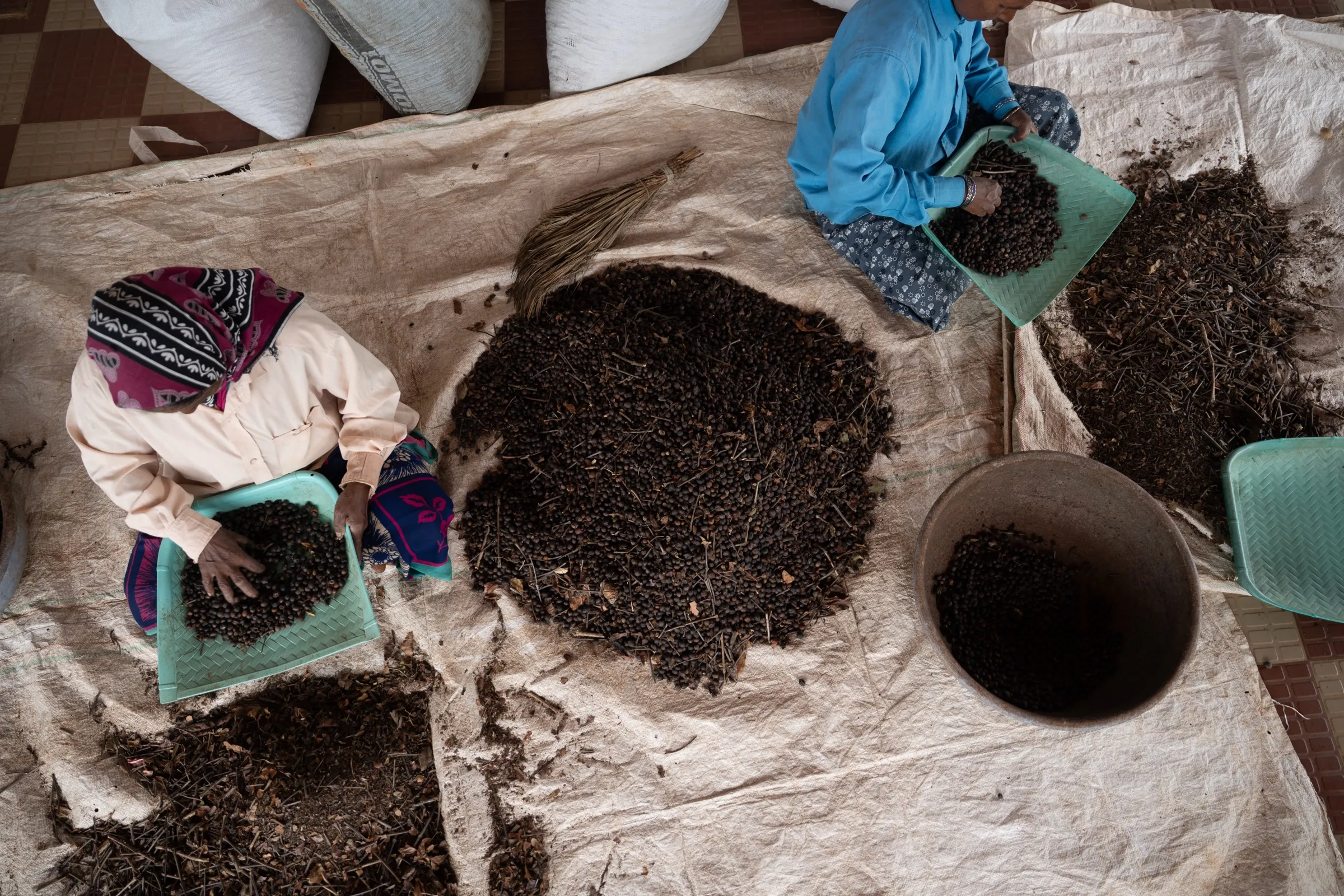
The land remains constant. Altitude, soil, canopy and rainfall do not change between lots. Everything that distinguishes one Dimbada coffee from another happens in the days after the cherry leaves the tree.
The chain
- 01Selective handpickingMature cherries only
- 02Process divergenceHoney · yeast · mosto · sequential · monsoon
- 03Careful dryingShade or sun, lot by lot
- 04RestingIn parchment
- 05RoastCalibrated per lot
Estate
- 01GuḍicaHoney Shade DriedInspired by jaggery — warmth, richness and a familiar Indian sweetness, left behind long after the cup is empty.100% Arabica
- 06KāḷiṅgaSun DriedNamed for the king cobra of the Western Ghats — a deep French roast built for strength, depth and intensity.60% Arabica / 40% Robusta
- 07JaladhiMonsoon MalabarJaladhi means ocean — Monsoon Malabar Arabica shaped by the moisture-rich winds of the Malabar coast.100% Arabica
Fermentation
- 02KiṇvaYeast FermentedIn Kannada, kiṇva speaks to fermentation and the transformation it brings — time, yeast and careful control shaping the cup.100% Arabica
- 04JaṭilaSequential FermentedIn Kannada, jaṭila speaks to complexity and intricacy — a Robusta shaped stage by stage through sequential fermentation.100% Robusta
Experimental
- 03GamakīMosto FermentedNamed for the singer who gives a raga its voice — expression and interpretation, echoed through mosto fermentation and shade drying.100% Arabica
- 05GēruCashew Fruit Co-FermentedGēru is the Kannada word for cashew apple — an uncommon Excelsa expression, recognised with an Honourable Mention at the Global Coffee Awards Asia 2026.100% Excelsa
Mosto
Mosto is the liquid released by coffee cherries during the initial fermentation or maceration stage. It is not an added ingredient — it is a byproduct of the fruit itself, rich in sugars and live microorganisms.
Collected from a successful batch and used to inoculate the next, it becomes a starter culture. The estate is not fermenting from zero each season; it is carrying a microbial lineage forward.
The technique comes from winemaking, and it carries winemaking's risk. Concentrated microbial activity moves quickly, and the window between complexity and spoilage is measured in hours.
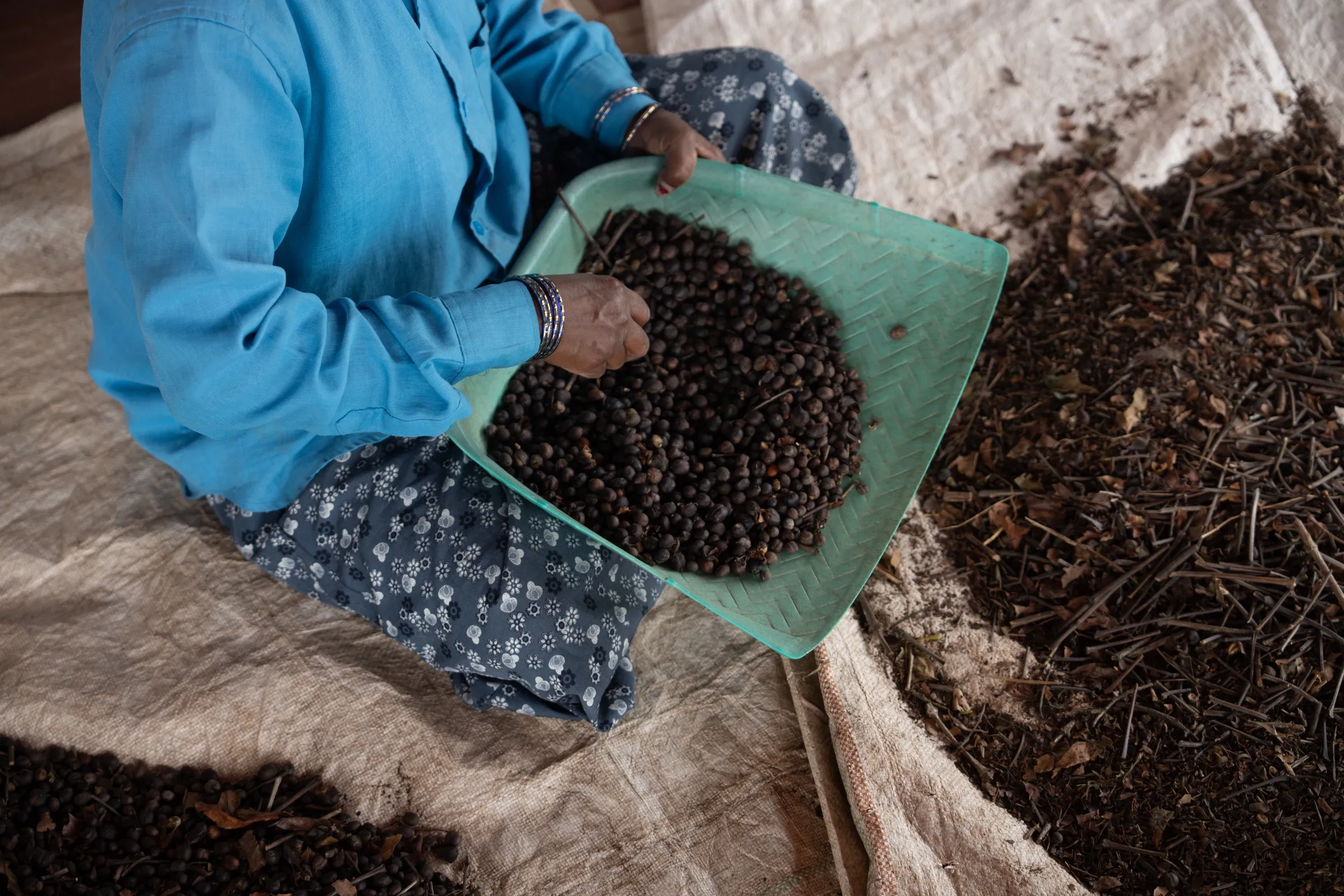
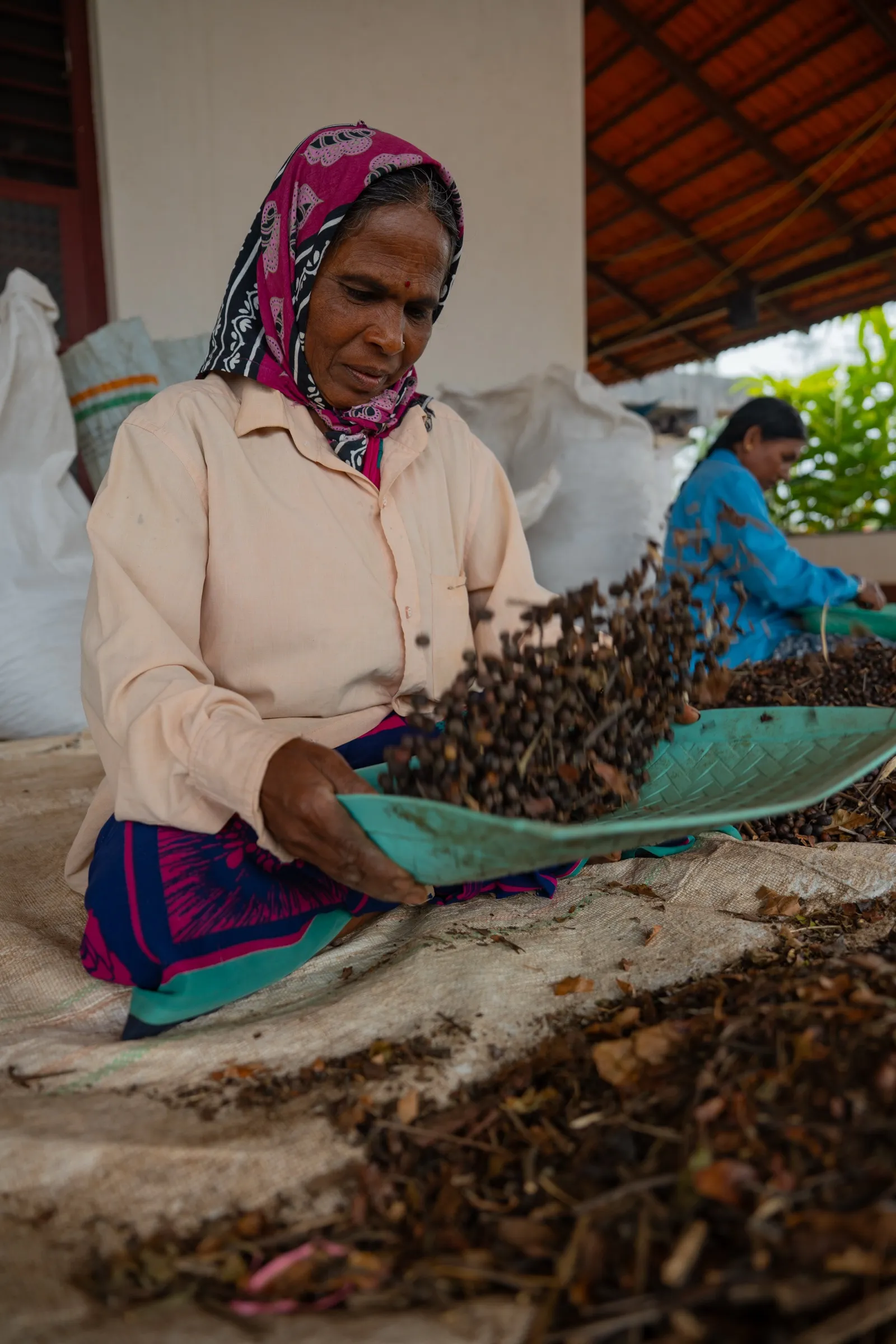
Each process produces a different coffee from the same hillside.
See all 7 lots