

The residents
Peacocks at sunrise, deer at dusk. On a wildlife-first estate, the animals are not visitors to be managed around.
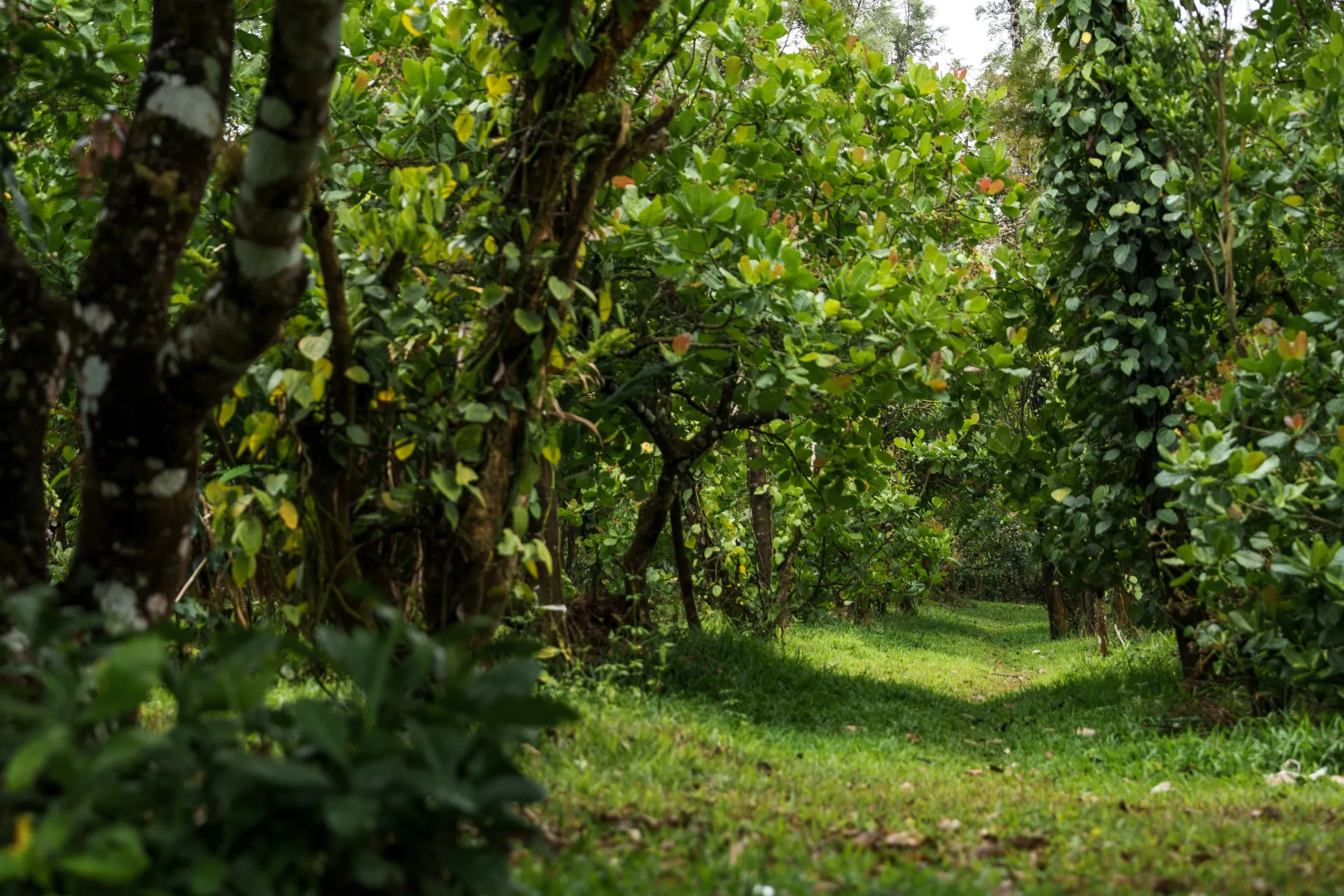
Most plantations treat wildlife as a variable to be controlled. Dimbada does not, and the decision has consequences that show up in the cup.
Keeping a canopy of shade trees means the coffee ripens more slowly. Slower ripening means denser sugar development. The same canopy that shelters peacocks, deer, foxes, wild boar and a considerable population of snakes is also the reason the cherries take their time.
What grows alongside
Pepper vines climb the shade trees. Arecanut palms, cashew and sapota are scattered across the terrain. Some of that fruit ends up in fermentation tanks with Excelsa cherries — the cashew, sapota, banana and musk melon lots are all made with material grown within sight of the coffee.
Nothing about this is efficient. It is simply how the estate has been run since the early 1900s, under third and fourth generation planters, and there is no compelling reason to change it.